<?xml version="1.0" encoding="UTF-8"?>
<?xml-stylesheet type="text/xsl" href="/wp-content/themes/feed/atom.xsl"?>
<feed
        xmlns="http://www.w3.org/2005/Atom"
        xmlns:wwe="http://release.wwe.com/atom/1.0"
        xmlns:thr="http://purl.org/syndication/thread/1.0"
        xmlns:taxo="http://purl.org/rss/1.0/modules/taxonomy/"
        xml:lang="en-US"
        xml:base="https://www.columbusspeedingtickets.com/wp-atom.php"
	>
    <title type="text">Law Office of C.F. Cowan, P.L.L.C.</title>
    <subtitle type="text">Law Office of C.F. Cowan, P.L.L.C.</subtitle>

    <updated>2026-06-03T10:17:39Z</updated>

    <link rel="alternate" type="text/html" href="https://www.columbusspeedingtickets.com" />
    <id>https://www.columbusspeedingtickets.com/feed/atom/</id>
    <link rel="self" type="application/atom+xml" href="https://www.columbusspeedingtickets.com/feed/atom/?forceByPassCache=0.9987191429201899" />
	
	<generator uri="https://wordpress.org/" version="6.9.4">WordPress</generator>
<icon>/wp-content/uploads/sites/1104745/2019/09/cropped-favicon-19-75x75.png</icon>
        <entry>
            <author>
									                    <name>On Behalf of Law Office of C.F. Cowan</name>
				            </author>
            <title type="html"><![CDATA[Columbus Motorists Rated As Some Of The Most-Ticketed Drivers]]></title>
            <link rel="alternate" type="text/html" href="https://www.columbusspeedingtickets.com/blog/2020/01/columbus-motorists-rated-as-some-of-the-most-ticketed-drivers/" />
            <id>https://www.columbusspeedingtickets.com/?p=51871</id>
            <updated>2026-02-13T16:28:21Z</updated>
            <published>2020-01-08T23:02:52Z</published>
					<taxo:topics><![CDATA[-]]></taxo:topics>
            <summary type="html"><![CDATA[Two of the busiest and most traffic-congested metro areas in Ohio made it to the Top 10 list of cities with the nation’s worst drivers. According to a study reported by WBNS-10TV, Columbus was the city earning the fourth-place spot for 2019, with Cleveland close behind at number seven. One of the factors contributing to the Arch City’s ranking included the high…]]></summary>
			                <content type="html" xml:base="https://www.columbusspeedingtickets.com/blog/2020/01/columbus-motorists-rated-as-some-of-the-most-ticketed-drivers/"><![CDATA[<span data-contrast="auto">Two of the busiest and most traffic-congested metro areas in Ohio made it to the Top 10 list of cities with the nation's worst drivers. According to a study reported by WBNS-10TV, Columbus was the city </span><span data-contrast="auto">earning the fourth-place spot</span><span data-contrast="auto"> for 2019, with Cleveland close behind at number seven. One of the factors contributing to the Arch City’s ranking included the high number of tickets issued for speeding and driving under the influence.</span><span data-ccp-props="{}"> </span>

<span data-contrast="auto">The study disclosed that the city’s fourth-place ranking was the second year in a row that it landed in the spot. With two major highways connecting Columbus and a high volume of vehicles passing through each day, the odds of a motorist receiving a traffic ticket in the city are rather high.</span><span data-ccp-props="{}"> </span>

<b><span data-contrast="auto">Computer-issued speeding tickets</span></b><span data-ccp-props="{}"> </span>

<span data-contrast="auto">Speeding citations appear to be one of the easiest tickets for Franklin County law enforcement officials to issue. Some highway patrol officers have the authority to use an innovative radar gun to capture a motorist's speed and process a citation. The radar gun has a built-in camera that takes a picture of a car's license plate and then transmits it to a computer to process the owner's information. Instead of requiring the officer to pull over the driver to issue the citation, the computer sends the vehicle owner a speeding ticket in the mail.</span><span data-ccp-props="{}"> </span>

<b><span data-contrast="auto">Contesting a speeding ticket</span></b><span data-ccp-props="{}"> </span>

<span data-contrast="auto">Sharing a vehicle with a spouse, relatives or friends may present a problem when receiving a speeding ticket in the mail. A vehicle’s registered owner is the typical recipient of the mailed citation. He or she, however, may not have been operating the car when a radar gun captured a picture of its license plate.</span><span data-ccp-props="{}"> </span>

<span data-contrast="auto">Speeding penalties could include a fine, points added to a driving record and community service, but receiving a ticket in the mail does not automatically result in a punishment. In Ohio, an individual has the right to </span><a href="https://www.columbusspeedingtickets.com/fighting-traffic-tickets/speeding/" target="_blank" rel="noopener noreferrer" data-wpel-link="internal"><span data-contrast="auto">contest a citation</span></a><span data-contrast="auto"> to avoid penalties. Doing so successfully may also prevent the ticket’s recipient from having a speeding conviction on his or her driving record.</span><span data-ccp-props="{}"> </span>]]></content>
						        </entry>
	        <entry>
            <author>
									                    <name>On Behalf of Law Office of C.F. Cowan</name>
				            </author>
            <title type="html"><![CDATA[One Tire Over The Line Can Result In A Citation Or Arrest]]></title>
            <link rel="alternate" type="text/html" href="https://www.columbusspeedingtickets.com/blog/2019/10/one-tire-over-the-line-can-result-in-a-citation-or-arrest/" />
            <id>https://www.columbusspeedingtickets.com/?p=51803</id>
            <updated>2026-02-13T16:29:22Z</updated>
            <published>2019-10-15T20:22:49Z</published>
					<taxo:topics><![CDATA[-]]></taxo:topics>
            <summary type="html"><![CDATA[Traffic laws in Ohio can be strict. Motorists should be careful to remain aware of even the smallest details.   As reported in TheNewspaper.com, a recent ruling by the Buckeye state’s Court of Appeals lawfully categorizes a “bobble” as an offense that can result in a traffic stop and citation. In some cases, it may even result in an arrest.  Be wary of the front tire “bobble”  An Ohio Court of Appeals three-judge panel recently defined a bobble as a vehicle’s…]]></summary>
			                <content type="html" xml:base="https://www.columbusspeedingtickets.com/blog/2019/10/one-tire-over-the-line-can-result-in-a-citation-or-arrest/"><![CDATA[<span data-contrast="auto">Traffic laws in Ohio can be strict</span><span data-contrast="auto">. M</span><span data-contrast="auto">otorists </span><span data-contrast="auto">should be careful to</span><span data-contrast="auto"> remain aware of even the smalle</span><span data-contrast="auto">st</span><span data-contrast="auto"> details.</span><span data-contrast="auto"> </span><span data-ccp-props="{}"> </span>

<span data-contrast="auto">As reported in TheNewspaper.com, a</span><span data-contrast="auto"> recent ruling by the Buckeye state’s Court of Appeals </span><a href="https://www.thenewspaper.com/news/66/6644.asp" target="_blank" rel="noopener noreferrer" data-wpel-link="external"><span data-contrast="none">lawfully</span><span data-contrast="none"> categorizes </span><span data-contrast="none">a “bobble” </span><span data-contrast="none">as </span><span data-contrast="none">a</span><span data-contrast="none">n</span><span data-contrast="none"> </span><span data-contrast="none">offense</span></a><span data-contrast="auto"> that </span><span data-contrast="auto">can</span><span data-contrast="auto"> result in </span><span data-contrast="auto">a traffic stop and citation. In some cases, it may </span><span data-contrast="auto">even </span><span data-contrast="auto">result in an arrest.</span><span data-ccp-props="{}"> </span>

<b><span data-contrast="auto">Be wary of the front tire “bobble”</span></b><span data-ccp-props="{}"> </span>

<span data-contrast="auto">An Ohio Court of Appeals three-judge panel </span><span data-contrast="auto">recently </span><span data-contrast="auto">define</span><span data-contrast="auto">d</span><span data-contrast="auto"> </span><span data-contrast="auto">a bobble</span><span data-contrast="auto"> as a vehicle’s front </span><span data-contrast="auto">edge</span><span data-contrast="auto"> extending over the stop bar at a red light. </span><span data-contrast="auto">This</span><span data-contrast="auto"> </span><span data-contrast="auto">constitutes </span><span data-contrast="auto">an illegal stop, and it </span><span data-contrast="auto">also </span><span data-contrast="auto">provides law enforcement with a justifiable reason to pull </span><span data-contrast="auto">over </span><span data-contrast="auto">a driver for a traffic stop.</span><span data-ccp-props="{}"> </span>

<b><span data-contrast="auto">O</span></b><b><span data-contrast="auto">ne small word can make a big difference</span></b><span data-ccp-props="{}"> </span>

<span data-contrast="auto">Ambiguity has a potential to be troublesome in matters of law, so it is not uncommon for judges and lawmakers to attempt to </span><span data-contrast="auto">clarify</span><span data-contrast="auto"> </span><span data-contrast="auto">issues as needed. In this case, the issue is the word “at.” The Ohio Court of Appeals determined t</span><span data-contrast="auto">o interpret “at” as meaning</span><span data-contrast="auto"> “before” </span><span data-contrast="auto">in the case of stopping a vehicle at a red light. </span><span data-contrast="auto">This means a driver must stop before the edge of the stop line; no part of his or her vehicle should extend past the edge of the </span><span data-contrast="auto">stop bar</span><span data-contrast="auto">. </span><span data-ccp-props="{}"> </span>

<b><span data-contrast="auto">A bobble has led to an arrest</span></b><span data-ccp-props="{}"> </span>

<span data-contrast="auto">In the case of one driver whose front tires straddled the stop line </span><span data-contrast="auto">at </span><span data-contrast="auto">a flashing red light</span><span data-contrast="auto">,</span><span data-contrast="auto"> th</span><span data-contrast="auto">is</span><span data-contrast="auto"> bobble gave cause to an Ohio trooper to pull over the vehicle. That was when the officer </span><span data-contrast="auto">detected the sm</span><span data-contrast="auto">e</span><span data-contrast="auto">ll of alcohol on the driver. After failing the field sobriety tests, the </span><span data-contrast="auto">officer arrested the </span><span data-contrast="auto">driver for DUI.</span><span data-ccp-props="{}"> </span>

<span data-contrast="auto">The driver </span><span data-contrast="auto">initially </span><span data-contrast="auto">managed to have the charges dismissed based on an assertion that the </span><span data-contrast="auto">officer conducted an illegal </span><span data-contrast="auto">traffic stop</span><span data-contrast="auto">. T</span><span data-contrast="auto">he prosecution, however, disagreed, and the Court of Appeals</span><span data-contrast="auto"> clarified the meaning of the statute</span><span data-contrast="auto">. </span><span data-contrast="auto">With a bobble n</span><span data-contrast="auto">ow defined as </span><a href="https://www.columbusspeedingtickets.com/fighting-traffic-tickets/disobeying-a-traffic-signal/" target="_blank" rel="noopener" data-wpel-link="internal"><span data-contrast="none">an illegal stop</span></a><span data-contrast="auto"> </span><span data-contrast="auto">and a lawful justification for an officer to conduct a traffic stop, </span><span data-contrast="auto">police may pull over and cite </span><span data-contrast="auto">a</span><span data-contrast="auto"> driver </span><span data-contrast="auto">if the front of his or her vehicle extends past the edge of the stop line</span><span data-contrast="auto"> at a red light</span><span data-contrast="auto">.</span><span data-contrast="auto"> </span><span data-ccp-props="{}"> </span>]]></content>
						        </entry>
	        <entry>
            <author>
									                    <name>On Behalf of Law Office of C.F. Cowan</name>
				            </author>
            <title type="html"><![CDATA[The Immediate Hazard Defense To A Ticket For Failure To Yield When Turning Left]]></title>
            <link rel="alternate" type="text/html" href="https://www.columbusspeedingtickets.com/blog/2019/09/the-immediate-hazard-defense-to-a-ticket-for-failure-to-yield-when-turning-left/" />
            <id>https://www.columbusspeedingtickets.com/?p=50883</id>
            <updated>2026-02-13T16:30:25Z</updated>
            <published>2019-09-11T13:24:07Z</published>
					<taxo:topics><![CDATA[-]]></taxo:topics>
            <summary type="html"><![CDATA[Have you received a ticket for failure to yield when turning left? Here is an overlooked defense that the prosecution may not anticipate. Pursuant to Ohio Revised Code 4511.42, “[t]he operator of a vehicle … intending to turn to the left within an intersection or into an alley, private road, or driveway shall yield the right of way to any…]]></summary>
			                <content type="html" xml:base="https://www.columbusspeedingtickets.com/blog/2019/09/the-immediate-hazard-defense-to-a-ticket-for-failure-to-yield-when-turning-left/"><![CDATA[<p class="MsoNormal"><span style="font-size: 11.5pt; line-height: 107%; font-family: 'Arial',sans-serif;">Have you received a ticket for failure to yield when turning left? Here is an overlooked defense that the prosecution may not anticipate. </span></p>
<p class="MsoNormal"><span style="font-size: 11.5pt; line-height: 107%; font-family: 'Arial',sans-serif;">Pursuant to Ohio Revised Code 4511.42, “[t]he operator of a vehicle … intending to turn to the left within an intersection or into an alley, private road, or driveway shall yield the right of way to any vehicle … approaching from the opposite direction, whenever the approaching vehicle … is <b style="mso-bidi-font-weight: normal;"><i style="mso-bidi-font-style: normal;">within the intersection</i></b> or <b style="mso-bidi-font-weight: normal;"><i style="mso-bidi-font-style: normal;">so close</i></b> to the intersection, alley, private road, or driveway <b style="mso-bidi-font-weight: normal;"><i style="mso-bidi-font-style: normal;">as to constitute an immediate hazard</i></b>.”</span></p>
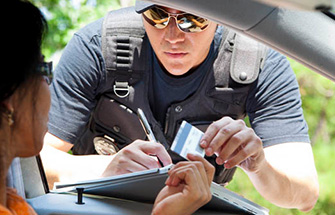
<p class="MsoNormal" style="text-align: justify;"><span style="font-size: 11.5pt; line-height: 107%; font-family: 'Arial',sans-serif;"><img class="size-full wp-image-51006 alignleft" src="/wp-content/uploads/sites/1104745/2019/09/traffic-ticket-2019-9-9-9.jpg" alt="Police officer writing out a traffic citation" width="335" height="215" />When police respond to a motor vehicle accident in which a left-turning vehicle and an approaching vehicle collide, the outcome is predictable. With virtual certainty, the left turning vehicle will be cited for failure to yield. Likewise, the prosecution likely will take the same default position that the left turning vehicle is always at fault. The problem with this default position is that Ohio law provides otherwise.</span></p>
<p class="MsoNormal" style="text-align: justify;"><span style="font-size: 11.5pt; line-height: 107%; font-family: 'Arial',sans-serif;">The prosecution must establish that the approaching vehicle was either <b style="mso-bidi-font-weight: normal;"><i style="mso-bidi-font-style: normal;">within the intersection</i></b> or <b style="mso-bidi-font-weight: normal;"><i style="mso-bidi-font-style: normal;">so close as to constitute an immediate hazard</i></b>. You have a colorable defense if the approaching vehicle was not in the intersection and not so close as to constitute an immediate hazard. </span></p>
<p class="MsoNormal" style="text-align: justify;"><span style="font-size: 11.5pt; line-height: 107%; font-family: 'Arial',sans-serif;">The first element – that the approaching vehicle was within the intersection – is simple enough to address. If based on your observations (and that of any witnesses) the approaching vehicle was not within the intersection, then you (and any such witnesses) may testify to this fact. </span></p>
<p class="MsoNormal" style="text-align: justify;"><span style="font-size: 11.5pt; line-height: 107%; font-family: 'Arial',sans-serif;">The second element – that the approaching vehicle was not so close as to constitute an immediate hazard – requires a little more information. In at least one case, <i style="mso-bidi-font-style: normal;">State v. Nicholson</i>, 12th Dist. Preble No. CA85-03-005, 1986 WL 7122, the Twelfth District Court of Appeals of Ohio held that an approaching vehicle did not constitute an immediate hazard when the same was traveling at 40 miles per hour at a distance of 500 to 600 feet from the point at which the left turning driver began his turn. In simple terms, the vehicle was so far away that the left-turning driver reasonably believed that he could safely turn left.</span></p>
<p class="MsoNormal" style="text-align: justify;"><span style="font-size: 11.5pt; line-height: 107%; font-family: 'Arial',sans-serif;">This speed and distance in <i style="mso-bidi-font-style: normal;">Nicholson</i> can be correlated to other speed limits using simple math. For simplicity, the ratio established in Nicholson is between 12.5 feet per mile per hour and 15 feet per mile per hour. Applying this ratio to a 20-mph speed limit, an approaching vehicle does not constitute an immediate hazard if it is between 250 and 300 feet or more away from a left-turning vehicle. And this makes sense, as the speed and distance are both roughly half of the above examples.</span></p>
<p class="MsoNormal" style="text-align: justify;"><span style="font-size: 11.5pt; line-height: 107%; font-family: 'Arial',sans-serif;">You should consider doing two things to ascertain whether the approaching vehicle in your case constituted an immediate hazard. First, ascertain the speed limit for the given street and the approaching driver’s reported speed. Second, measure the distance from where you were turning left to where you first saw the approaching vehicle at the point at which you were turning left. If the approaching vehicle was outside of the ratio of 12.5 feet per mile per hour and 15 feet per mile per hour, then you arguably have a colorable defense!</span></p>
<p class="MsoNormal" style="text-align: justify;"><span style="font-size: 11.5pt; line-height: 107%; font-family: 'Arial',sans-serif;">This approach is especially handy in traffic cases. In other types of cases, such as personal injury cases, litigants often use expensive accident reconstruction experts to establish speeds and causes of motor vehicle accidents. The problem is that accident reconstruction experts cost thousands of dollars. Generally, large expenditures on such costly experts are justified in cases that involve substantial sums of money, like personal injury cases. But for a traffic ticket, the cost of hiring such an expert is prohibitive. Fortunately, through above common-sense approach, you arguably can reach the same conclusion without resorting to costly experts.</span></p>
<p class="MsoNormal" style="text-align: justify;"><span style="font-size: 11.5pt; line-height: 107%; font-family: 'Arial',sans-serif;">If you ever receive a ticket for failure to yield when turning left, don’t make the mistake of simply accepting an officer’s or a prosecutor’s preliminary conclusion that you were at fault. Instead, consult competent Columbus traffic attorney to ascertain whether you have this often-overlooked defense based upon a common-sense application of speed and distance.</span></p>]]></content>
						        </entry>
	        <entry>
            <author>
									                    <name>On Behalf of Law Office of C.F. Cowan</name>
				            </author>
            <title type="html"><![CDATA[Drivers beware of Ohio’s law on right of way and turn signals]]></title>
            <link rel="alternate" type="text/html" href="https://www.columbusspeedingtickets.com/blog/2019/09/drivers-beware-of-ohios-law-on-right-of-way-and-turn-signals/" />
            <id>https://www.columbusspeedingtickets.com/?p=50878</id>
            <updated>2026-02-13T16:31:22Z</updated>
            <published>2019-09-11T13:20:34Z</published>
					<taxo:topics><![CDATA[-]]></taxo:topics>
            <summary type="html"><![CDATA[Have you ever tried to turn from a street controlled by a stop sign onto a busy street that is not controlled by a stop sign or a traffic light? What if this busy street had only two travel lanes with one northbound travel lane and one southbound lane. Ordinarily, drivers in both northbound and southbound lanes have the right…]]></summary>
			                <content type="html" xml:base="https://www.columbusspeedingtickets.com/blog/2019/09/drivers-beware-of-ohios-law-on-right-of-way-and-turn-signals/"><![CDATA[Have you ever tried to turn from a street controlled by a stop sign onto a busy street that is not controlled by a stop sign or a traffic light? What if this busy street had only two travel lanes with one northbound travel lane and one southbound lane. Ordinarily, drivers in both northbound and southbound lanes have the right of way. To make this turn, you may have to time your entry into the street to avoid traffic proceeding in one direction (if you are turning right) or both directions (if you are turning left).

With the foregoing in mind, consider the circumstance presented by a driver of a vehicle in the southbound lane slowing down and activating his turn signal as if to turn right onto another street before reaching your street. By all appearances, the driver looks like he is turning into this street. For this reason, you proceed with a left turn across this driver’s path. But instead of turning right, the signaling driver proceeds straight and crashes into the driver’s side of your car.

One would think that the driver who signaled as if turning right and but proceeded straight waived the right of way. But the Supreme Court of Ohio reached the opposite conclusion. In <em>Timmons v. Russomano</em> (1968), 14 Ohio St.2d 124, 236 N.E.2d 665, the Supreme Court of Ohio articulated the general rule regarding the right of way as follows:

<img class="wp-image-50996 size-full alignleft" src="/wp-content/uploads/sites/1104745/2019/09/taxi-in-street.jpg" alt="Taxi cab driving down a city street" width="234" height="303" />Under the applicable statutes and court decisions, it is the established law in this state that the driver of a motor vehicle proceeding over a through street or highway in a lawful manner has the absolute right of way over a vehicle on an intersecting stop street, and the former may assume that the latter will respect and observe such right of way.

The supreme court noted in this decision one exception to this general rule, stating as follows:

‘If however the former (driver of a motor vehicle having the right of way), just as he is approaching or entering the intersection, discovers that the latter is not yielding the right of way and has thereby placed himself in a perilous situation, it becomes the duty of the former to use ordinary care not to injure the latter after becoming aware of his perilous situation.’

The decision in <em>Timmons</em> involved a driver with the right of way (the “right-of-way driver”) signaling to turn into a driveway three houses down from where another the driver (the “other driver”) was stopped at a stop sign and about to turn onto the same street. Seeing the right-of-way driver’s turn signal (as if to enter the driveway), the other driver thought that she could safely enter the street. But the right-of-way driver, despite giving the turn signal, proceeded straight and struck the vehicle driven by the other driver.

The supreme court noted that the other driver “assumed too much” by attempting to enter the street. According to the supreme court, it did not matter that the right-of-way driver activated her turn signal. Otherwise, the supreme court noted that the right-of-way driver was proceeding at a moderate speed and could not have avoided the collision.

Notably, two judges dissented in <em>Timmons</em>. Nevertheless, <em>Timmons</em> continues to be the law on Ohio. While <em>Timmons</em> reached a seemingly strained conclusion, the decision did not address the defense of forfeiture of right of way. Forfeiture of right of way occurs when the right-of-way vehicle proceeds in an unlawful manner. A driver may forfeit the right of way by driving at night without headlights, driving at an overly excessive speed, etc. However, forfeiture of the right of way can be difficult to establish, especially if this defense is based on a claim that the other driver was speeding or driving too fast. Forfeiture of right of way is a topic for another blog post.]]></content>
						        </entry>
	        <entry>
            <author>
									                    <name>On Behalf of Law Office of C.F. Cowan</name>
				            </author>
            <title type="html"><![CDATA[Defeating police and prosecutorial assumptions involving a ticket for running a red light.]]></title>
            <link rel="alternate" type="text/html" href="https://www.columbusspeedingtickets.com/blog/2019/09/defeating-police-and-prosecutorial-assumptions-involving-a-ticket-for-running-a-red-light/" />
            <id>https://www.columbusspeedingtickets.com/?p=50872</id>
            <updated>2026-03-04T22:36:07Z</updated>
            <published>2019-09-11T13:14:59Z</published>
					<taxo:topics><![CDATA[-]]></taxo:topics>
            <summary type="html"><![CDATA[The most important issue in a red-light crash case is whether you were already in the intersection before the traffic light turned red. If you entered an intersection on a green light or a yellow light, and then the light turned red, then you are entitled to clear the intersection. This commonly happens at busy intersections where a vehicle turning…]]></summary>
			                <content type="html" xml:base="https://www.columbusspeedingtickets.com/blog/2019/09/defeating-police-and-prosecutorial-assumptions-involving-a-ticket-for-running-a-red-light/"><![CDATA[The most important issue in a red-light crash case is whether you were already in the intersection before the traffic light turned red. If you entered an intersection on a green light or a yellow light, and then the light turned red, then you are entitled to clear the intersection. This commonly happens at busy intersections where a vehicle turning left lawfully enters an intersection on a green or yellow traffic light and clears the same after the traffic light cycles to red. Conversely, if the approaching vehicle in your case did not enter the intersection before the traffic light turned red, and your vehicles collide, then you have a colorable defense to a red-light ticket as that vehicle arguably is at fault.

While this is a matter of common sense, three Ohio statutes support this conclusion as well. Ohio Revised Code Section 4511.01(UU) defines “right of way” as “[t]he right of a vehicle … to proceed uninterruptedly in a lawful manner in the direction in which it or the individual is moving in preference to another vehicle … approaching from a different direction into its or the individual's path.”

Ohio Revised Code Section 4511.13(B)(1) states that a driver facing a steady circular yellow signal is thereby warned that the related green movement or the related flashing arrow movement is being terminated or that a steady red signal indication will be exhibited immediately thereafter when vehicular traffic shall not enter the intersection.

Ohio Revised Code Section 4511.13(C)(1), provides that a driver facing a steady circular red signal indication, unless entering the intersection to make another movement permitted by another signal indication, must stop at a clearly marked stop at the stop line, or none then the crosswalk, or if none then simply before entering the intersection.

[caption id="attachment_50999" width="280"] <img class="size-full wp-image-50999" src="/wp-content/uploads/sites/1104745/2019/09/red-light.jpg" alt="" width="280" height="215" /> Red traffic light[/caption]

When reading these code sections together, an approaching vehicle only has the right of way if it is proceeding “in a lawful manner.” If the approaching vehicle runs through a red light, then this vehicle has forfeited the “right of way.” Likewise, if the vehicle entering the intersection under a yellow light proceeds to make a left turn resulting a collision with an approaching vehicle running a red light, then the vehicle running the red light has forfeited the right of way and the driver of that vehicle arguably is at fault for causing the collision.

Ohio appellate decisions likewise support this conclusion. While not a crash case, in <em>City of Columbus v. Sharaf</em>, 10th Dist. No. 02AP-2, 149 Ohio App.3d 171, 2002-Ohio-4502, 776 N.E.2d 543, the Tenth District Court of Appeals recognized that under state and local statutes a vehicle may proceed through an intersection on a yellow light. Moreover, this vehicle may clear the intersection even if the light has turned red.]]></content>
						        </entry>
	        <entry>
            <author>
									                    <name>On Behalf of Law Office of C.F. Cowan</name>
				            </author>
            <title type="html"><![CDATA[Lawyer up! When lawyers hire other lawyers in traffic cases, shouldn’t you?]]></title>
            <link rel="alternate" type="text/html" href="https://www.columbusspeedingtickets.com/blog/2019/09/lawyer-up-when-lawyers-hire-other-lawyers-in-traffic-cases-shouldnt-you/" />
            <id>https://www.columbusspeedingtickets.com/?p=50841</id>
            <updated>2026-02-13T16:33:57Z</updated>
            <published>2019-09-10T20:28:25Z</published>
					<taxo:topics><![CDATA[-]]></taxo:topics>
            <summary type="html"><![CDATA[I was talking to a friend of mine who is a prominent attorney in town. He mentioned hiring an attorney to represent him on a traffic ticket for a moving violation that he received in Florida. I am aware of another instance where a judge hired a traffic attorney for a moving violation. And I too have hired traffic attorneys…]]></summary>
			                <content type="html" xml:base="https://www.columbusspeedingtickets.com/blog/2019/09/lawyer-up-when-lawyers-hire-other-lawyers-in-traffic-cases-shouldnt-you/"><![CDATA[<img class="size-medium wp-image-49126 alignleft" src="/wp-content/uploads/sites/1104745/2019/06/getting-a-laywer-300x169-1-300x169.jpg" alt="Man in suit standing in front of office building" width="300" height="169" />I was talking to a friend of mine who is a prominent attorney in town. He mentioned hiring an attorney to represent him on a traffic ticket for a moving violation that he received in Florida. I am aware of another instance where a judge hired a traffic attorney for a moving violation. And I too have hired traffic attorneys to represent me for speeding tickets in Alabama and Michigan. The point of all of this is simple. Rhetorically speaking, when lawyers hire other lawyers in traffic cases, shouldn’t you?

Two well-known maxims frame the reasons why lawyers hire other lawyers in traffic cases. The first maxim comes from Benjamin Franklin, who wrote as follows: “An ounce of prevention is worth a pound of cure.” The second maxim comes from Abraham Lincoln, who wrote as follows: “He who represents himself has a fool for a client.”

These maxims are discussed below:
<h2>“An ounce of prevention is worth a pound of cure.”</h2>
As to the first maxim, hiring a traffic attorney may be the “ounce of prevention” that is worth “a pound of cure.” By attacking each traffic ticket when received, a driver potentially may avoid accumulating multiple convictions for moving violations on his or her driving record. Under Ohio law, such accumulation may increase the severity of the given traffic offense and the potential punishment for the offense. As discussed on this website’s page entitled <a href="/fighting-traffic-tickets/ohio-bmv-points-system/" data-wpel-link="internal">Ohio BMV Points System</a>, the accumulation of points may impair a person’s license to drive. Such moving violations may also affect insurance rates and current or future employment.

Traffic stops are unexpected events. Most people do not start the day expecting to be the recipient of a traffic ticket for a moving violation. Just as the first traffic ticket is unexpected, so too are the subsequent traffic tickets. The best way to avoid an accumulation of convictions for moving violations is to lawyer up each time that you receive a traffic ticket. And upon hiring a traffic attorney, the goal is always the same … to secure a conviction for a no-points violation, a reduced violation or even a dismissal. While every case is different, and the outcome is not assured, the cost of hiring a traffic attorney may be the “ounce of prevention” worth paying to secure the “pound of cure.”
<h2>“He who represents himself has a fool for a client.”</h2>
As to the second maxim, an objective attorney is in a better position to assess the facts and applicable law without his or her judgment being clouded by a personal stake in the case. Except for rare cases, such an attorney’s communication and statements to the police and the prosecutor(s) are irrelevant and inadmissible as evidence in the case. Conversely, a defendant’s statements may be admissible as evidence in the case as a party admission.

In addition to the foregoing, there is something to be said for having another person versed in the law champion your case. If a defendant personally asks a prosecutor for a break in his or her case, there is a risk that this will come across poorly. This may be due to the awkward dynamics of the communication between a defendant and a prosecutor. Or this may be due to a defendant’s use of unartful or inappropriate statements in such communication. Conversely, a traffic attorney versed in the law can advocate for a given defendant when communicating with a prosecutor in an effort to secure the best possible result.
<h2>Hire a Columbus lawyer for your traffic ticket</h2>
Frequently a lawyer can appear in court and resolve a traffic case in the client’s absence, provided both the court and the prosecutor agree. This saves the client the aggravation of taking time off from work, fighting traffic to get to court on time, waiting for potentially hours for the case to be called, standing in long lines and potentially having to do it all over again if the case is continued.

If you are seeking a traffic lawyer, contact us at [nap_phone id="LOCAL-REGULAR-NUMBER-2"] or <a href="/contact/" data-wpel-link="internal">fill out our online contact form</a>.]]></content>
						        </entry>
	        <entry>
            <author>
									                    <name>On Behalf of Law Office of C.F. Cowan</name>
				            </author>
            <title type="html"><![CDATA[How to defend against a hit skip in Ohio]]></title>
            <link rel="alternate" type="text/html" href="https://www.columbusspeedingtickets.com/blog/2019/06/how-to-defend-against-a-hit-skip-in-ohio/" />
            <id>https://www.columbusspeedingtickets.com/?p=49637</id>
            <updated>2026-02-13T16:34:58Z</updated>
            <published>2019-06-27T02:18:04Z</published>
					<taxo:topics><![CDATA[-]]></taxo:topics>
            <summary type="html"><![CDATA[A hit-skip offense, or a hit-and-run, is a serious crime in Ohio. If you receive a hit-skip conviction in Columbus, you could face expensive fines, driver’s license suspension and even jail time. Defending your rights in the face of a hit-skip infraction could enable you to avoid serious penalties. The courts might even dismiss the charges against you if your…]]></summary>
			                <content type="html" xml:base="https://www.columbusspeedingtickets.com/blog/2019/06/how-to-defend-against-a-hit-skip-in-ohio/"><![CDATA[<img class="size-medium wp-image-50994 alignleft" src="/wp-content/uploads/sites/1104745/2019/06/hit-run-300x193.jpg" alt="Solitary car with damaged bumper on the side of a road" width="300" height="193" />A hit-skip offense, or a hit-and-run, is a serious crime in Ohio. If you receive a hit-skip conviction in Columbus, you could face expensive fines, driver’s license suspension and even jail time.

<a href="/blog/2019/09/lawyer-up-when-lawyers-hire-other-lawyers-in-traffic-cases-shouldnt-you/" data-wpel-link="internal">Defending your rights</a> in the face of a hit-skip infraction could enable you to avoid serious penalties. The courts might even dismiss the charges against you if your attorney comes through with a strong defense.
<h2>What are Ohio’s hit skip laws?</h2>
Understanding the details of the law you allegedly broke could help you form a defense. <a href="http://codes.ohio.gov/orc/4549.02" target="_blank" rel="noopener noreferrer" data-wpel-link="external">Ohio Revised Code 4549.02</a> requires all drivers to immediately stop at the scene of any accident with people or property on public roads. You must remain at the scene until you have exchanged contact information with the other driver or left a note with this information on a parked vehicle.

If you stopped at the scene but left before giving the owner of the other vehicle, anyone injured in the accident or a responding police officer your information, you could technically receive a hit-skip charge. The same is true if you left without calling for medical help if someone had an injury. You could make many mistakes that result in a hit-skip charge in Columbus.
<h2>Common defenses for a hit-skip charge</h2>
Hit-skip charge defenses available will depend on the unique circumstances of your situation. A lawyer can investigate the accident to find ways to protect your freedoms. A few defense options may include the following:
<ul>
 	<li>You were not the one driving the vehicle</li>
 	<li>You did not realize you hit a person or property</li>
 	<li>You were in a single-vehicle accident</li>
 	<li>An officer arrested you before your 24-hour reporting period ended</li>
 	<li>The officer made a clerical mistake in writing your ticket</li>
</ul>
You may be able to lower the misdemeanor charge down to a noncriminal traffic infraction with lesser penalties, or even to convince the courts to dismiss the charge entirely.]]></content>
						        </entry>
	        <entry>
            <author>
									                    <name>On Behalf of Law Office of C.F. Cowan</name>
				            </author>
            <title type="html"><![CDATA[Following Too Close]]></title>
            <link rel="alternate" type="text/html" href="https://www.columbusspeedingtickets.com/blog/2017/04/following-too-close/" />
            <id>https://www.columbusspeedingtickets.com/?p=50971</id>
            <updated>2026-02-13T16:36:19Z</updated>
            <published>2017-04-04T20:56:14Z</published>
					<taxo:topics><![CDATA[-]]></taxo:topics>
            <summary type="html"><![CDATA[Following to close is prohibited by Ohio Revised Code Section 4511.34. Under this code section, the driver of a motor vehicle is prohibited from following another vehicle more closely than is reasonable and prudent, having due regard for the speed of such vehicle, the traffic, and the condition of the highway. Generally, the driver of any truck, or motor vehicle…]]></summary>
			                <content type="html" xml:base="https://www.columbusspeedingtickets.com/blog/2017/04/following-too-close/"><![CDATA[<img class="alignleft wp-image-49115 size-medium" src="/wp-content/uploads/sites/1104745/2019/06/Rear-End-Collision-320x202-300x189.jpg" alt="minor car accident" width="300" height="189" />Following to close is prohibited by Ohio Revised Code Section 4511.34. Under this code section, the driver of a motor vehicle is prohibited from following another vehicle more closely than is reasonable and prudent, having due regard for the speed of such vehicle, the traffic, and the condition of the highway.

Generally, the driver of any truck, or motor vehicle drawing another vehicle, when traveling upon a roadway outside a business or residence district is required to maintain a sufficient space, whenever conditions permit, between such vehicle and another vehicle ahead so an overtaking motor vehicle may enter and occupy such space without danger. This provision does not prevent overtaking and passing. Nor does this provision apply to any lane specially designated for use by trucks.

Outside a municipal corporation, the driver of any truck, or motor vehicle when drawing another vehicle, while ascending to the crest of a grade beyond which the driver’s view of a roadway is obstructed, must not follow within three hundred feet of another truck, or motor vehicle drawing another vehicle. This provision does not apply to any lane specially designated for use by trucks.

Motor vehicles being driven upon any roadway outside of a business or residence district in a caravan or motorcade, must maintain a sufficient space between such vehicles so an overtaking vehicle may enter and occupy such space without danger. This provision does not apply to funeral processions.

As an aside, following too close is a “tail-gating” type of offense. The focus of this offense is distance to the vehicle in front. Another related offense is failure to maintain an assured clear distance ahead, commonly referenced as ACDA. The focus of an ACDA offense is excessive speed, such that a driver is unable to stop within an assured clear distance ahead to avoid a collision. For a discussion on the ACDA offense, click here.
<h2>How close is too close?</h2>
Except as set forth above, the Ohio Revised Code does not provide any specific formula or methodology to determine how close is too close. The Ohio Department of Public Safety has published a Digest of Ohio Motor Vehicle laws, which provides the following guidance:

The distance it takes to stop your vehicle depends on your reaction time, speed at which you are traveling, the condition of your brakes and the condition of the pavement (wet, dry, icy). A driver must maintain sufficient distance between his or her vehicle and the vehicle ahead. Some safety experts advise drivers to allow one car length ahead for each 10 mph of speed. Others suggest following the “three-second rule”: Watch the vehicle ahead pass a stationary object, such as a lamppost, counting “one thousand one, one thousand two, one thousand three.” If you pass the lamppost before you say “three,” you are following too closely and should slow your speed. In bad weather, increase the space to four or five seconds traveling time.

In determining whether a driver is following too close, courts consider factors like reaction time, speed, brake condition, weather conditions, and estimated distance.
<h2>Penalty for following to close.</h2>
Following to close ordinarily is a minor misdemeanor. The potential penalty for a minor misdemeanor traffic offense includes the imposition of a fine of up to $150, up to thirty hours of community service, and court costs.

But if, within one year of the offense, the offender previously has been convicted of or pleaded guilty to one predicate motor vehicle or traffic offense, then following to close is elevated to a fourth degree misdemeanor. The potential penalty for a fourth degree misdemeanor traffic infraction includes the imposition of a jail term of not more than thirty days, an additional or alternative community control sanction plus reimbursement for the cost of this sanction, a fine of up to $250, and court costs.

And if, within one year of the offense, the offender previously has been convicted of two or more predicate motor vehicle or traffic offenses, then following to close is elevated to a third degree misdemeanor. The penalty for a third degree misdemeanor traffic infraction includes the potential imposition of a jail term of not more than sixty days, an additional or alternative community control sanction plus reimbursement for the cost of this sanction, a fine of up to $500, and court costs.

Community control sanctions generally can include residential placement, house arrest, drug/alcohol testing and treatment, specified education and training, community service, curfew, probation, etc. Under certain circumstances, the court also may order an offender to pay restitution to any identifiable victim who incurred economic loss as a result of the violation.
<h2>Points assessed for following to close.</h2>
A conviction on a traffic ticket for following to close carries 2 points in Ohio on an offender’s driving record. For more information on how the Ohio Bureau of Motor Vehicles (BMV) processes points for moving violations and the substantial penalty for excessive points accumulation, press <a href="/fighting-traffic-tickets/ohio-bmv-points-system/" data-wpel-link="internal">Ohio BMV Points System</a>.
<h2>Hire a Columbus attorney to represent you on your ticket for following too close.</h2>
Frequently a lawyer can appear in court and resolve a traffic case in the client’s absence, provided both the court and the prosecutor agree. This saves the client the aggravation of taking time off from work, fighting traffic to get to court on time, waiting for potentially hours for the case to be called, standing in long lines, and potentially having to do it all over again if the case is continued.

If you are seeking a traffic lawyer, contact us at [nap_phone id="LOCAL-REGULAR-NUMBER-2"] or <a href="/contact/" data-wpel-link="internal">online</a>. We offer legal representation to drivers charged with traffic tickets in the Columbus metropolitan area, including Franklin County Municipal Court, Bexley Mayor’s Court, Canal Winchester Mayor’s Court, Dublin Mayor’s Court, Gahanna Mayor’s Court, Grandview Heights Mayor’s Court, Granville Mayor’s Court, Grove City Mayor’s Court, Hilliard Mayor’s Court, New Albany Mayor’s Court, Obetz Mayor’s Court, Pataskala Mayor’s Court, Pickerington Mayor’s Court, Reynoldsburg Mayor’s Court, Upper Arlington Mayor’s Court, Westerville Mayor’s Court, Whitehall Mayor’s Court and Worthington Mayor’s Court.

We also offer legal representation to drivers charged with traffic tickets in other courts near the Columbus metropolitan area, including Circleville Municipal Court (Pickaway County), Delaware County Municipal Court, Fairfield County Municipal Court, Licking County Municipal Court, Marysville Municipal Court (Union County), and Madison County Municipal Court.]]></content>
						        </entry>
	        <entry>
            <author>
									                    <name>On Behalf of Law Office of C.F. Cowan</name>
				            </author>
            <title type="html"><![CDATA[Driving, texting and use of electronic communication devices]]></title>
            <link rel="alternate" type="text/html" href="https://www.columbusspeedingtickets.com/blog/2017/03/driving-texting-and-use-of-electronic-communication-devices/" />
            <id>https://www.columbusspeedingtickets.com/?p=50837</id>
            <updated>2026-02-13T16:37:42Z</updated>
            <published>2017-03-07T21:16:40Z</published>
					<taxo:topics><![CDATA[-]]></taxo:topics>
            <summary type="html"><![CDATA[Ohio law provides for two related types of offenses involving driving, texting and use of electronic communication devices. The first offense is driving while texting. This offense applies to both adults and juveniles. The second offense is the use of electronic communication devices by persons under 18 years of age. As the name suggests, this offense applies only to juveniles.…]]></summary>
			                <content type="html" xml:base="https://www.columbusspeedingtickets.com/blog/2017/03/driving-texting-and-use-of-electronic-communication-devices/"><![CDATA[<img class="alignleft wp-image-49080 size-medium" src="/wp-content/uploads/sites/1104745/2019/06/Blog1-300x200.jpg" alt="Person driving while looking at phone" width="300" height="200" />Ohio law provides for two related types of offenses involving driving, texting and use of electronic communication devices. The first offense is driving while texting. This offense applies to both adults and juveniles. The second offense is the use of electronic communication devices by persons under 18 years of age. As the name suggests, this offense applies only to juveniles.

Perhaps surprisingly, under Ohio law, no BMV points are assessed for a conviction for either of these offenses. Nevertheless, these offenses do carry the potential for other notable penalties. The elements of these offenses and the related penalties are discussed below.
<h2>Driving while texting</h2>
Driving while texting is prohibited by Ohio Revised Code Section 4511.204(A). Under this code section, no person may drive a motor vehicle on any street, highway or property open to the public for vehicular traffic while using a handheld electronic wireless communications device to write, send or read a text-based communication. This prohibition against such use of a handheld electronic wireless communications device has a number of exceptions, including the following:
<ul>
 	<li>Use of a handheld electronic wireless communications device for emergency purposes, including an emergency contact with a law enforcement agency, hospital or health care provider, fire department, or other similar emergency agency or entity</li>
 	<li>Use of handheld electronic wireless communications by a person driving a public safety vehicle in the course of the person’s duties</li>
 	<li>Use of a handheld electronic wireless communications device in a motor vehicle in a stationary position outside a lane of travel</li>
 	<li>Use of a handheld electronic wireless communications device for the purpose of making or receiving a telephone call, including reading, selecting, or entering a name or telephone number</li>
 	<li>Receiving wireless messages on a device regarding the operation or navigation of a motor vehicle; safety-related information, including emergency, traffic or weather alerts; or data used primarily by the motor vehicle</li>
 	<li>Receiving wireless messages via radio waves</li>
 	<li>Using a device for navigation purposes</li>
 	<li>Conducting wireless interpersonal communication with a device that does not require manually entering letters, numbers, or symbols or reading text messages, except to activate, deactivate, or initiate the device or a feature or function of the device</li>
 	<li>Operating a commercial truck while using a mobile data terminal that transmits and receives data</li>
 	<li>Using a handheld electronic wireless communications device in conjunction with a voice-operated or hands-free device feature or function of the vehicle</li>
</ul>
<h2>Driving while texting cannot be the sole basis for a traffic stop</h2>
Notably, under Section 4511.204(C)(1), law enforcement officers are prohibited from the following:
<ul>
 	<li>Stopping an automobile operated on any street or highway for the sole purpose of determining whether a driving while texting violation has been or is being committed</li>
 	<li>Stopping an automobile for the sole purpose of issuing a ticket, citation or summons for a violation of that nature</li>
 	<li>Causing the arrest of or commencing a prosecution of a person for a violation of that nature</li>
 	<li>Viewing the interior or visually inspecting any automobile being operated on any street or highway for the sole purpose of determining whether a violation of that nature has been or is being committed</li>
</ul>
<h2>Use of wireless electronic communication devices by persons under 18 years of age</h2>
A similar prohibition against the use of wireless electronic communication devices while driving applies to minors. Under Ohio Revised Code Section 4511.205(A), no holder of a temporary instruction permit who has not attained the age of 18 years, and no holder of a probationary driver’s license, may drive a motor vehicle on any street, highway, or property used by the public for purposes of vehicular traffic or parking while using in any manner an electronic wireless communications device.

This prohibition against such use of a device is subject to a number of exceptions as well, including the following:
<ul>
 	<li>Using an electronic wireless communications device for emergency purposes, including an emergency contact with a law enforcement agency, hospital or health care provider, fire department, or other similar emergency agency or entity</li>
 	<li>Using an electronic wireless communications device whose motor vehicle is in a stationary position and the motor vehicle is outside a lane of travel</li>
 	<li>Using a navigation device in a voice-operated or hands-free manner who does not manipulate the device while driving</li>
</ul>
<h2>Penalty For Driving While Texting</h2>
Pursuant to Section 4511.204(D), driving while texting is classified as a minor misdemeanor. The potential penalty for a minor misdemeanor traffic offense includes the imposition of a fine of up to $150, up to 30 hours of community service and court costs. Additionally, pursuant to Section 4511.204(E), a municipality may enact an ordinance prohibiting driving while texting with a violation of the same resulting in greater penalties than are described here.
<h2>Penalty for use of wireless devices by persons under age 18</h2>
Use of devices by persons under 18 years of age carries a fine of up to $150. In addition, the court is required to impose a class 7 suspension of the offender’s driver’s license or permit for a definite period of 60 days.

If the person previously has been adjudicated a delinquent child or a juvenile traffic offender for a violation of this section, then whoever violates this section shall be fined $250. In addition, the court is required to impose a class 7 suspension of the person’s driver’s license or permit for a definite period of one year.
<h2>Points for driving while texting and use of communication devices by persons under age 18</h2>
A conviction on a traffic ticket for driving while texting carries zero points in Ohio on an offender’s driving record. Likewise, an adjudication on a traffic ticket use of wireless electronic communication devices by persons under 18 years of age carries zero points in Ohio on an offender’s driving record.
<h2>Speak with an attorney about your ticket</h2>
If you are seeking a traffic lawyer, contact us at [nap_phone id="LOCAL-REGULAR-NUMBER-2"] or <a href="/contact/" data-wpel-link="internal">fill out our online contact form</a>. We offer legal representation to drivers charged with traffic tickets in the Columbus metropolitan area.]]></content>
						        </entry>
	</feed>